
Why Live Game Shows Outshine Classic Tables for Casual Players
Most casual players aren’t chasing perfect odds-they’re chasing a good night. That’s where live game shows win. They borrow the best bits of TV hosts, pacing, build-ups-and wrap them around simple mechanics. No rulebooks, no coolers leaning over the felt. Just an easy way to join, watch a moment unfold, and enjoy the ride.

Frictionless On-Ramp Beats Formal Table Etiquette
Classic tables expect people to adapt to the game. Game shows flip it: the game adapts to people. A newcomer doesn’t need to memorize hand values, optimal splits, or table signals-just follow the flow and enjoy the presentation.
What casual players tend to appreciate:
- Zero awkwardness. No worrying about “slow rolling” or messing up table protocol.
- Short learning curve. The studio and the host explain what’s happening as it happens.
- Pick-up-and-play pacing. Rounds are quick, visual, and self-contained-perfect for short sessions.
When the entrance is smooth, a player can focus on the feeling, not the etiquette.
Entertainment-First Design (and Why That Matters)
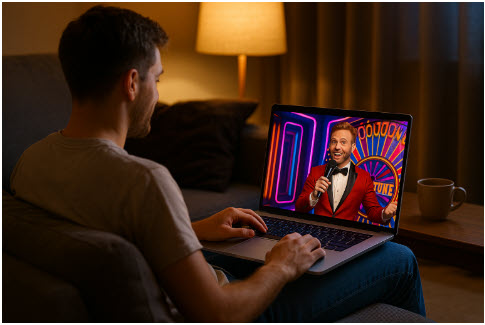
Live game shows are built like performances. The host sets the mood, the studio cues the energy, and the round structure creates little arcs of suspense. That turns a simple spin into a mini-event-something casual players can enjoy without “studying” the game.
Many newcomers sample a couple of spins to catch the rhythm and, when the tempo feels right, check the Funky Time game real money version to join with confidence-no maze-like lobbies, no blind clicks. It’s the difference between hunting for a seat at a formal table and walking straight into a show that’s already fun to watch.
To make the contrast clearer, here’s a quick side-by-side:
The point isn’t that tables are bad; it’s that game shows are friendlier for someone who just wants to relax without reading a manual.
Why Casual Players Stay Longer (Without Grinding)
Game shows reward attention with moments, not homework. The “I’ll watch one more spin” feeling comes from how the show is staged-music cues, camera cuts, quick callbacks from the host. Casual players don’t need a spreadsheet to enjoy that; they just follow the mood.
A couple of simple habits go a long way:
- Two rounds observing, one round playing. A built-in pause keeps emotions from steering decisions.
- Flat stakes during hype. The louder the room gets, the more helpful it is to keep bet sizes steady.
- Exit on satisfaction. Leave when it still feels good; protect the memory of the session.
That’s not a “system.” It’s a mindset that keeps the experience light-more show than stress.
Case Study: FunkyTime.Games as a Newcomer-Friendly Gateway
Jumping into a random lobby can feel like walking into a cinema halfway through the film. FunkyTime.Games trim that friction. Instead of dumping players into endless lists, it frames what Funky Time actually feels like-how the rounds flow, where the energy spikes, what the studio atmosphere is trying to deliver. It’s a small thing with a big effect: clarity before commitment.
There’s no hard sell. The site simply gives first-timers a sense of pace and tone so they can choose when to engage. For casual players who value comfort over complexity, that “preview of the vibe” makes the first session smoother-and usually more fun.
The Community Effect (Without the Pressure)
Chat isn’t a strategy; it’s seasoning. Still, it helps casual players feel part of something. Cheering when a bonus hits, joking with the host, sharing a near miss-it turns isolated bets into shared moments. Classic tables can be social, but it’s a different rhythm; you’re participating with others rather than performing for them.
Two friendly guardrails for the social layer:
- Don’t mirror the crowd. Keep stake sizes flat when hype spikes.
- Use chat as color, not guidance. If FOMO kicks in, skip one round and watch.
Cost of Attention vs. Cost of Entry
Game shows respect for time. A player can drop in for ten minutes, catch a couple of high-energy spins, and leave satisfied. Classic tables are great for people who want a longer arc-strategy, steady pace, and slow burn. But for casual sessions after work or on a break, shows provide highlight-ready structure without demanding full focus.
If you map it to “costs”:
- Entry cost (mental): lower for shows, higher for tables.
- Attention cost: shows spike and release; tables stay even.
- Satisfaction cost: shows deliver mini peaks; tables reward patience.
Neither is “better” for everyone, but for casual players chasing a quick, enjoyable story, shows consistently land the punch.
Responsible Fun (Practical, Not Preachy)
The easiest guardrails are the ones people actually use:
- Round budgets (e.g., six active rounds, then a pause).
- A hard stake ceiling that never moves mid-session.
- A feeling triggers two tells (rushed breathing, impatient clicking) → one round off.
These small rules protect the memory of the session, which is what keeps casual players coming back: a night that felt good, not a chase that dragged on.
Final Take
Casual players choose live game shows because they’re built for people first. The host sets the temperature, the studio carries the vibe, and the mechanics stay simple enough to enjoy without homework. Watch a couple of spins, join when the mood fits, and leave while it still feels like a highlight. That formula beats table jitters for most newcomers-and it’s why the show format keeps winning hearts, one round at a time.
