
Why an E-Book Doesn’t Have a Page Number Anymore
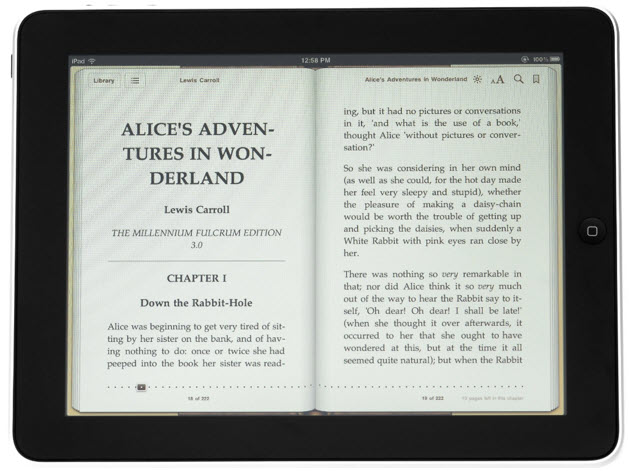
Remember those times, when teachers said stuff like turn to page 147? Because everybody had paper copies and gum was cheaper, and life was simpler. We’ve all seen the memes where you move a picture in a word document and everything changes. Still hurts, I know. Increase the font size and a paragraph moves. Turn your phone sideways and it moves again. Open the same book on a tablet and what looked like one page on your e-reader may now fit onto half a screen.
That is not a flaw either, it is the whole point of EPUB.
The current EPUB 3.3 specification describes reflowable content as the default, and the draft EPUB 3.4 keeps it that way. The content adjusts to the available reading space, screen size, etc. It’s logical too, not to have the text permanently typeset. Then the reading system of your choice can divide it into screens or let it scroll continuously. However, the format can always be changed if the situation calls for it. Convertio’s epub to pdf converter takes an EPUB file and produces a fixed-layout PDF, making the document better suited to situations where a stable page arrangement is more important than flexible reading.
So what happened to the page number?
Negotiable numbers
A typical EPUB’s content is built using web technologies.
- EPUB 3 uses XHTML or SVG for its content and can incorporate stylesheets and other resources inside the publication package, like images, for instance.
- That makes an ordinary EPUB closer to a packaged responsive website than to a stack of photographed paper pages.
- Someone reading a novel on a small phone can enlarge the text, a huge advantage in my book (no pun intended).
- A reader can change fonts or line spacing without the publisher having to create a separate edition for every possible display.
Google Play Books picks this up a notch. It has:
- Original Pages
They use a fixed-page layout generally corresponding to the printed edition - Flowing text
Readers can change font/text size/line spacing.
Google actually recommends publishers provide both PDF and EPUB when possible: PDF preserves the original layout while EPUB gives readers the reflowable version.
But here’s the rub. If one reader has enlarged the type and another has made it tiny, their screens contain different amounts of text. Then what do we do with the page number??
Amazon said, let’s use location numbers instead. It describes Kindle locations as the digital equivalent of physical page numbers because they provide a stable way to reference a position regardless of font size. But page numbers are old enough to live through nuclear war, so they are still around. Let’s dive.
Yes, an EPUB can still have page numbers
Amazon specifically notes that Kindle books aren't necessarily the same on a page-by-page basis as the physical versions. A reference like “see page 82” should then normally be converted to a link to the corresponding page.
However, Kindle also has a feature known as Real Page Numbers. Publishers can map positions inside an EPUB to the page numbers of a particular print edition. Amazon suggests that people determine which book edition the number corresponds to, so they can know what those numbers are referring to. This is especially helpful when there are others who need to follow along in a paper book, like a book club or classroom.
This overarching concept is supported by the EPUB standard itself. The static location of pages can be identified using page-break markers and page lists, while current EPUB accessibility specifications support the provision of metadata to identify the source edition of the pagination. Each hardcover, paperback and other edition may have a varying page count, of course, which is why it's important to find the source.
In an EPUB, "no pages" is not a requirement. More precisely, pages are no longer the basic units of the text. They may be created on the reader's device, or remapped to a specific fixed edition.
That also explains why someone might deliberately move in the opposite direction. If the primary reason for converting reflowable EPUB content to PDF is to ensure consistent paging or presentation on printing or across devices, then Convertio can do the job. The downside is clear: making the layout more structured means giving up a lot of the flexibility that EPUB has provided in the first place. Fixed layouts may limit the user's ability to control the presentation, and W3C recommends thinking about how a specific layout will affect the usability and accessibility of the publication.
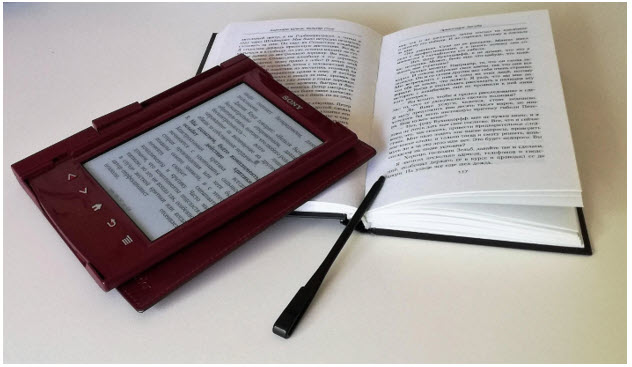
So why do we still have so many e-book formats?
But if EPUB can do digital books so well, one might wonder why everyone just didn't agree to use EPUB and move on.
Due to the fact that “e-book” is a classification for several quite distinct positions.
A typical novel is a great reflowable text candidate. A children's picture book, comic or publication which relies on careful placement to aid its illustrations may not be. Therefore EPUB can cater to fixed layout or reflowable layout; W3C points to the following common scenarios where page design matters: children's books and comics. PDF, on the other hand, will still help you produce a copy of an original page. Google Play Books is using PDF just for “Original Pages” mode.
There are also platform specific publishing systems.
For example: Kindle. Amazon accepts EPUB files that conform to its publishing requirements, but its Kindle Create software can also produce KPF, or Kindle Package Format. Amazon's current recommendation for publishing through KDP is KPF; KPF can handle Kindle formatting features that EPUB cannot.
Formats also leave fossils behind.
MOBI was a long time partner to e-books and Kindle, but it's a legacy publishing format at Amazon. KDP ended support for reflowable MOBI uploads in August 2021 and completed the transition on March 18, 2025, when it stopped accepting fixed-layout MOBI files as well. For new reflowable books, Amazon recommends that publishers choose EPUB, KPF and DOCX; for fixed-layout books, the choices include EPUB and KPF.
So, the digital library grows extensions not convergences. Formats represent various eras, devices, publishing platforms and expectations of what a digital “book” could really accomplish.
A file extension is really a reading decision. If you are reading a 500-page novel on different devices, reflow is extremely useful. If you need stable pages to print, PDF may make more sense. Convertio lets users change the format when the job they need the file to perform changes. Its EPUB-to-PDF conversion, for example, preserves the book's content and images while producing a fixed-layout PDF.
And this is perhaps the strangest thing e-books did to books. They separated the book from the page.
