What Is AI Video Translation? Definition, Use Cases, and How It Works
Picture this: you are posting a video online and hope it will reach a global audience. However, most viewers still can’t fully understand it. For such a long time, language remained in its leading position as a big barrier to online video distribution. In 2026, that barrier is out of the picture. Now, the way content crosses borders has been changed by AI video translation. It becomes faster and more accessible than ever before.
What Is AI Video Translation? (The Science Behind the Magic)
At its core, AI Video Translation is a multi-layered relay race of smart tech. It’s not just "Google Translate for movies"; it's a sophisticated pipeline that handles:
- ASR (Automatic Speech Recognition): The AI "listens" to spoken speech and produces extremely precise text.
- Neural Machine Translation (NMT): Slang and cultural context are preserved as the text is translated using sophisticated models.
- Voice Cloning & TTS: The "wow" factor is voice cloning and TTS. To "clone" the original speaker's voice into the new language, the AI examines their pitch and tone.
- AI Lip-Sync: The next step is AI Lip-Sync, which renders the video such that the speaker's mouth moves precisely in time with the new audio.
AI Video Translation Statistics and Market Impact in 2026
This isn't just a gimmick; it’s a global gold rush. According to Slator, the language services market is projected to hit $100 billion this year, with AI localization leading the charge.
The results speak for themselves. The YouTube Official Blog reports that creators using multi-language audio tracks see an average 25%+ increase in watch time from international audiences. Meanwhile, Market.us research shows that 75% of marketers now believe video translation is essential for boosting global engagement.
Where AI Translation Shines: Top Use Cases for Creators and Brands
AI video translation is now being utilized extensively in a variety of businesses; it is no longer in the experimental stage. Sometimes, traditional localization can be too costly or slow. In cases like this, its speed and reach are its greatest advantages.
Global Marketing & Brand Campaigns
AI translation enables brands to launch a single campaign in multiple languages simultaneously, without separate production teams.
E-Learning, Training & Knowledge Sharing
Education and SaaS teams use AI translation to quickly localize tutorials and training videos for global audiences.
Content Creation & Creator Expansion
Creators can dub or subtitle existing videos to reach new international audiences and extend content lifespan.
Customer Support & Product Education
Localized support videos help international users resolve issues faster while reducing support workload.
What is VMEG AI: Key Features, Capabilities, and Limitations
VMEG AI is an AI-powered platform that serves as a leading tool in this war. That is to say, it is designed to help the localization workflow for both businesses and creators be easier. VMEG offers services like translating and dubbing video content, which can help to reduce the need for manual editing.
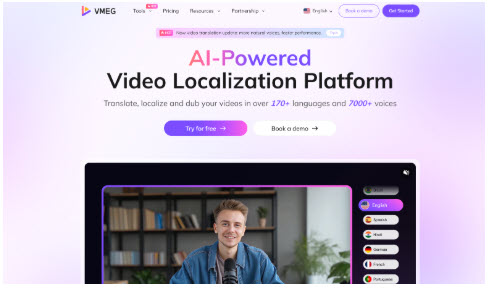
Key Features of VMEG Include:
- Broad Language Support: The ability to translate into more than 170 languages and regional dialects, guaranteeing the preservation of regional subtleties (such as Brazilian versus European Portuguese).
- Massive Voice Library: Access to more than 7,000 high-quality AI voices through a vast voice library enables a wide range of character matching.
- Emotional Adaptation: Algorithms that avoid the "robotic" sense of conventional TTS by identifying and mimicking the speaker's emotional tone.
Lip Sync AI Video Maker: Perfect lip synchronization between voiceovers and on-screen speakers is ensured by Lip Sync AI Video Maker, creating a natural viewing experience.
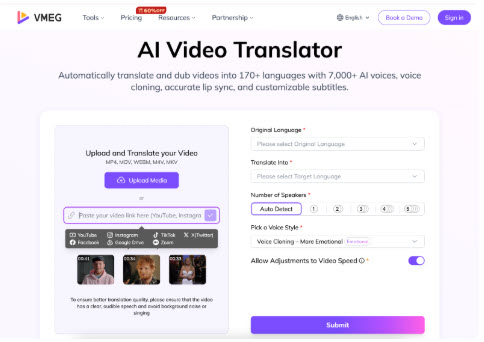
Limitations to Consider
- Audio Quality Dependency: Results depend heavily on the clarity of the original audio; background noise or overlapping speech can reduce translation and dubbing accuracy.
The Bottom Line
In 2026, if your video only speaks one language, you’re essentially leaving 80% of the world on "read." AI Video Translation is the key to ensuring your message isn't only heard, but also truly understood.
