
The Syntactic Uncanny Valley: How Netizens are Rewriting the Rules of Online Authenticity
If you look back at the archives of internet linguistics, the evolution of cyber-slang was entirely driven by human limitation. We created abbreviations like "BRB" and "AFK" because typing on early keyboards was slow. We adopted leetspeak (h4x0r) to bypass early forum filters. Our digital language was defined by its beautiful, chaotic imperfections.
Today, the internet is facing the exact opposite problem. The proliferation of large language models has flooded our feeds, inboxes, and timelines with text that is structurally flawless, grammatically pristine, and entirely devoid of a human pulse. We have entered the "Syntactic Uncanny Valley"—a phase in internet culture where perfect spelling and rigid sentence structures are immediately viewed with deep suspicion. To navigate this new landscape, digital citizens are actively seeking new tools to restore the "human" back into their digital footprints.
New NetLingo: Defining the Post-AI Web
To understand this cultural shift, we must first update our cyber-dictionary. The era of generative text has birthed entirely new behaviors and anxieties among everyday web users.
·Definition: The Syntactic Uncanny Valley – The phenomenon where a piece of text is so mathematically perfect and overly sanitized that it causes a feeling of unease or distrust in the human reader, immediately signaling that a bot wrote it.
·Definition: Text-Washing – The act of intentionally restructuring machine-generated text to reintroduce human idiosyncrasies, natural pacing, and conversational tone.
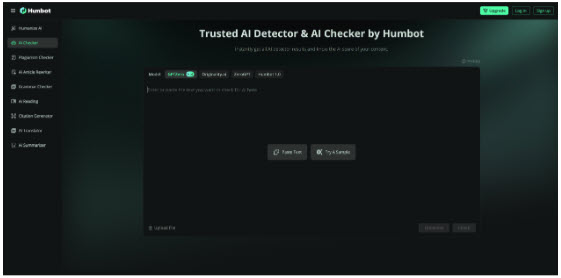
When the web first realized that bots could write like scholars, a digital arms race began. Webmasters, educators, and social media moderators needed a way to separate human thought from algorithmic output. To police this new wave of synthetic content, institutions began deploying the undetectable ai checker—sophisticated software designed to scan for the invisible mathematical patterns, low perplexity, and predictable phrasing inherent in machine writing.
The Resistance Against "Bot-Speak"
The presence of these digital bouncers created a massive headache for the average netizen. People legitimately rely on AI to outline emails, brainstorm blog posts, or overcome writer's block. However, they soon realized that publishing the raw output was social suicide. If an algorithm flags your heartfelt LinkedIn post or crucial business email as "100% AI," your digital credibility instantly vanishes.
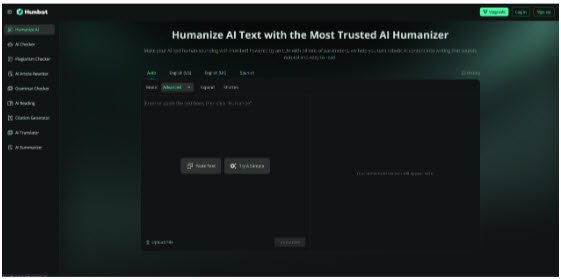
This anxiety triggered a massive cultural pushback. Internet users realized they needed a translation layer between their AI assistant and their final audience. Consequently, the demand for a free humanize ai solution skyrocketed. Users were no longer just looking for grammar checkers to fix their mistakes; they were looking for "anti-grammar" checkers to intelligently rough up their perfect AI drafts, injecting the "burstiness" (varied sentence length) and natural flow that proves a human is behind the keyboard.
Democratizing the Human Touch
In the fast-paced economy of the internet, accessibility is everything. The ability to sound authentic online should not be a luxury reserved only for those who can afford premium subscription models. For freelance writers, non-native English speakers, and independent creators operating on tight budgets, finding reliable ways to humanize ai text free of charge became a fundamental requirement for digital survival.
If you are a non-native speaker using AI to translate your brilliant ideas into English, the last thing you want is for a spam filter or an overly aggressive detection bot to dismiss your contribution as programmatic spam. You need a tool that understands the nuances of human colloquialisms, internet slang, and natural conversational rhythms.
Reclaiming Our Digital Voice
The internet has always been a space of continuous adaptation. Just as we learned to spot phishing emails and deepfakes, we are now learning how to filter out "Bot-Speak." However, we don't have to abandon the incredible efficiency of AI drafting to maintain our authenticity.
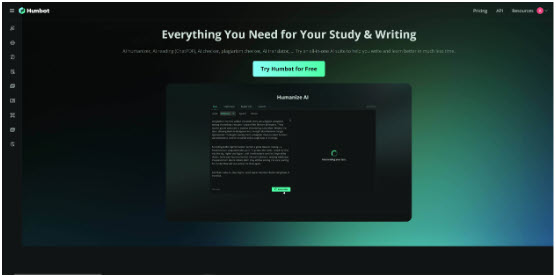
This is exactly where platforms like humbot.ai enter the modern cyber-lexicon. Operating as a state-of-the-art text processor, it acts as the ultimate digital translator for the 2020s. It analyzes the rigid, predictable output of a language model and seamlessly rewrites it to echo the warmth, variability, and authenticity of actual human typing. By embracing these sophisticated rewriting technologies, today's netizens can harness the full speed of algorithmic generation while proudly retaining the one thing an AI can never replicate: a genuine human voice.
