
The Psychology Behind Staying at the Top in Esports
Sometimes it seems to me that in esports it’s not just about winning, but about staying at the top. The pressure from fans, the organization, and even your own expectations makes this task more difficult than it might appear. Every new tournament becomes a test of mental strength, where any mistake instantly becomes public. While mechanical skills can be trained, resilience to stress is a constant effort within yourself. And it is precisely this inner work that distinguishes a champion from just a strong player.
Emotional Control and Stress Resilience
I believe the ability to stay calm when everything is on the line is one of the most important skills in esports. Even the strongest players in Valorant or CS2 experience situations where their mechanics are no longer the deciding factor, and the main challenge becomes dealing with stress. You can prepare perfectly in practice, but once the lights are on and thousands of viewers are watching, nerves often take control.
A clear example is when teams dominate throughout the season but fall apart in the finals. This doesn’t always mean they were unprepared — more often, their mindset failed them in the decisive moment. To avoid this, players increasingly rely on not just coaches or psychologists, but also on tools like valorant live stats, which help analyze performance without emotions. By focusing on hard data — headshot rates, map efficiency, or clutch win percentage — it becomes easier to understand mistakes and move forward with confidence.
In the end, stress resilience is about finding the balance between emotions and rational thinking. The teams that work on this mental strength consistently are the ones that succeed under the heaviest pressure. At the highest level, it’s not only about who shoots better, but about who can keep a clear head when the stakes are at their peak.
Constant Motivation

At the top, it’s easy to lose the drive to keep moving forward. It may feel like the ultimate goal has been reached, and it’s safe to ease up a little. But those are the very moments when rivals catch up and overtake. In esports, there’s no such thing as permanent stability — every new season brings fresh contenders who are ready to work harder and longer to take someone else’s spot. Staying at the top means not only showing a high level of play but also constantly keeping that inner fire alive.
I’ve often noticed examples in League of Legends: a team wins a championship, becomes the regional or even world champion, and then in the following season their performance drops sharply. This isn’t always about declining form — more often, it’s psychological. After big victories, players subconsciously stop seeking new challenges, take fewer risks, and lose that hunger to win. Lack of motivation gradually shows in practice: enthusiasm fades, reactions slow down, and strategies become more predictable.
On the other hand, there are teams and players who manage to stay at the top for years precisely because they continuously find new incentives. Examples include organizations like T1 in the Asian region or NAVI in the CS scene: they’ve competed in dozens of tournaments, yet they always find a reason to prove their strength again. For some, motivation comes from the desire to rewrite history; for others, it’s personal rivalry with another player or team. In any case, it’s the psychological mindset that determines whether a champion becomes a one-hit wonder or a true legend capable of holding their standard for many years.
Dealing with Criticism
Being in the spotlight means accepting not only praise but also an endless stream of criticism. On social media, every action is dissected under a microscope: a mistake in a crucial moment, a questionable champion pick, or even a facial expression during a broadcast can become a reason for discussion. And not everyone can handle that. For younger players, it’s especially difficult — pressure from fans and media can quickly undermine their confidence.
For example, professional Dota 2 players have often admitted that after tough losses they had to turn off comments or block access to social networks just to stay focused and prevent outside opinions from affecting their game. Similar situations happen in CS2: even if a player performs well overall, a single bad moment can trigger hundreds of negative messages. In such conditions, the mind is under tremendous strain, and without resilience it’s hard to cope.
I think the real strength of a player lies not in completely ignoring criticism, but in being able to distinguish constructive feedback from noise. When a coach or analyst points out weaknesses, it helps players improve. But when comments are written out of anger or frustration, it’s important not to take them to heart. Those who manage to find this balance not only preserve their confidence but also use criticism as fuel for growth. That’s why many organizations now introduce regular sessions with sports psychologists to help players develop a healthier relationship with external opinions.
Team and Environmental Support
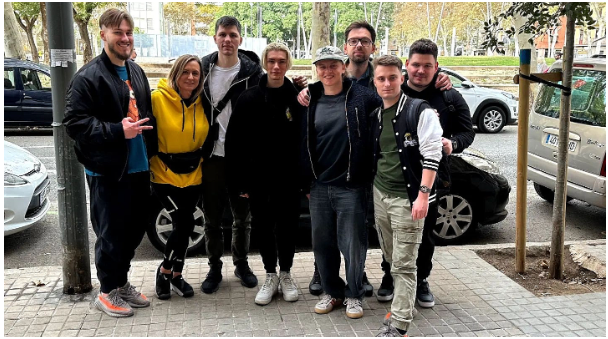
Even the strongest player cannot handle the pressure of top-level competition alone. Support from the environment plays a huge role: when there’s a coach, a psychologist, and teammates nearby, it becomes easier to maintain balance and confidence. Trust within the team allows a player to feel that he isn’t carrying the weight of the result alone, but is part of a mechanism where everyone has their role.
A good example is organizations that invest in psychological preparation. Na`Vi or G2, in different years, actively hired sports psychologists, and the results were noticeable: players became more confident, their decisions in stressful situations looked more rational, and losses were perceived as experience rather than catastrophe. This kind of approach creates an atmosphere where even defeats don’t tear the team apart from the inside.
There’s also another important aspect — human relationships outside the stage. Simple things like team dinners, honest conversations, or even group activities help build cohesion. I recall examples from CS2, where lineups without star-studded rosters achieved incredible results thanks to strong chemistry between players. To me, it’s clear: without support and trust from the team, even a genius risks burning out quickly, while with them, anyone has a chance to stay at the top much longer.
Conclusion
For me, psychology in esports is the invisible part of success. It doesn’t show up on the scoreboard, but it is what determines who can remain at the top longer than others. Staying at the top means not only winning matches, but also overcoming yourself every single day.
