
Mastering the Map in Arc Raiders: How Situational Awareness Dictates Your Survival
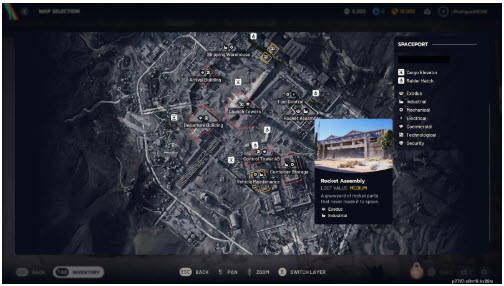
In Arc Raiders, survival is rarely determined by raw mechanical skill alone. While precision and reaction time matter, the game’s core systems place far greater emphasis on information control.
Players who understand the map, interpret environmental signals, and anticipate movement consistently outperform those with faster reflexes but weaker awareness.
Built on layered terrain, dynamic weather, and complex AI behaviors, Arc Raiders rewards players who treat each mission as an information-gathering exercise.
This guide explores why situational awareness outweighs aim, how to read the environment effectively, and where the limits of human perception begin to show.
Why Information Beats Precision in Arc Raiders
Many competitive shooters reward pinpoint accuracy above all else. Arc Raiders breaks from that tradition by designing encounters where being prepared matters more than being precise.
The Time-to-Engagement Reality
In most encounters:
● The player who spots danger first controls the engagement.
● Positioning determines the outcome before any exchange begins.
● Retreating early is often more valuable than fighting perfectly.
By the time a confrontation starts, the winner is usually already decided not by aim, but by who had better information.
Arc Raiders reinforces this through:
● Long sightlines combined with complex cover.
● Vertical spaces that reward anticipation.
● AI patrols that act as early warning systems.
In this environment, awareness becomes a survival multiplier.
Environmental Cues: Reading the World Like a System
The game world in Arc Raiders is constantly communicating. Players who learn to “read” it gain an enormous advantage without firing a single shot.
Sound as a Directional Sensor
Arc Raiders uses advanced spatial audio to convey distance, elevation, and movement intent.
Key audio indicators include:
● Footsteps changing pitch based on elevation.
● Mechanical movement from AI units.
● Environmental interaction sounds like vaulting or landing.
Experienced players don’t just hear sound, they map it mentally. A brief noise can reveal:
● Enemy approach routes.
● Whether someone is moving quickly or cautiously.
● If a fight is already happening nearby.
Listening carefully allows players to avoid danger or prepare an ambush without ever being seen.
Visual Signals That Reveal Past Activity
Even when enemies are no longer present, the environment tells a story.
Look for:
● Destroyed structures or altered terrain.
● Disabled machines or damaged environmental objects.
● Open pathways that were previously sealed.
These visual cues indicate recent player activity. A quiet area isn’t always safe; it may simply be recently cleared. Understanding this distinction prevents walking into high-risk zones unprepared.
Predicting Movement Instead of Reacting to It
Arc Raiders punishes reactive play. Success comes from predicting where threats will be, not where they already are.
Map Knowledge as a Strategic Asset
Each map contains:
● High-traffic corridors.
● Resource-rich choke points.
● Natural ambush locations.
Players who memorize these patterns can:
● Anticipate enemy rotations.
● Avoid unnecessary exposure.
● Position themselves defensively before danger arrives.
Over time, the map becomes less of a maze and more of a flowchart of probable movement.
The Limits of Human Awareness
Even with perfect knowledge and careful attention, human perception has limits. Arc Raiders intentionally exploits these limits through environmental design.
Weather Effects and Visibility
Dynamic weather reduces visual clarity and depth perception.
● Fog obscures long-range observation.
● Rain softens sound direction.
● Environmental effects blend movement into the background.
These systems don’t just add atmosphere; they actively interfere with situational awareness.
Shadows, Contrast, and Camouflage
Lighting plays a significant role in concealment.
● Shadows hide movement.
● High-contrast areas distort silhouettes.
● Vertical structures break predictable lines of sight.
Enemies positioned above or below your field of view are especially difficult to detect. Even experienced players can miss threats simply because the environment masks them effectively.
Verticality: The Awareness Multiplier
Unlike flat arenas, Arc Raiders emphasizes vertical combat spaces.
This introduces challenges such as:
● Sounds travel differently above and below.
● Visual blind spots when scanning horizontally.
● Increased cognitive load when tracking multiple elevations.
Human awareness is naturally horizontal. Arc Raiders forces players to expand that awareness vertically, which significantly increases difficulty.
When Natural Awareness Isn’t Enough
Despite mastering audio cues, visual indicators, and map knowledge, there are moments when even the most attentive players feel overwhelmed.
The sheer complexity of:
● Multi-level terrain.
● Simultaneous AI and player threats.
● Environmental interference.
can make complete awareness feel impossible. This is where frustration often sets in, particularly during high-stakes extractions.
While mastering audio cues and environmental signals is essential, the desire for total battlefield awareness leads some factions of the community to utilize Cheats for Arc Raiders, specifically to track enemy positions through complex terrain.
This behavior reflects the pressure created by information-heavy systems, not a replacement for skill, but a response to the limits of human perception in demanding environments.
Why Awareness Mastery Still Wins Long-Term
From a sustainability perspective, players who rely on genuine situational awareness develop skills that persist across updates, balance changes, and new content.
True awareness mastery provides:
● Faster decision-making.N
● Better risk assessment.
● Improved extraction success rates.
● Greater adaptability across maps.
More importantly, it preserves the integrity of progression and personal improvement.
Training Your Awareness the Right Way
Players looking to improve legitimately can focus on:
● Playing slower, information-first runs.
● Reviewing failed encounters to identify missed cues.
● Lowering unnecessary audio distractions.
● Actively scanning vertical spaces.
Treat each mission as a learning exercise, not just a loot run.
Conclusion
Arc Raiders doesn’t reward perfection; it rewards preparation. Situational awareness, environmental reading, and predictive movement matter far more than flawless execution.
The game’s technology-driven systems challenge players to operate at the edge of human perception. Those who embrace that challenge, refine their awareness, and respect the limits of their senses will survive longer, extract more consistently, and enjoy the experience far more deeply.
