
How Major Tournaments Change the Infrastructure of Host Cities
Major international tournaments are known to change the cities chosen to be their host. Stadiums, infrastructure, and other facilities are developed long before the tournament is even opened by the government or local authorities. Such changes can benefit the population of a city for decades after the tournament ends. Host cities sometimes use the opportunity to solve the infrastructure problems that had remained unresolved because of financial constraints before. Read further to know how the preparation for the tournament can change the future of the city.
Upgrades of Transport and Public Spaces
Roads, airports, and railways need to be improved to cope with the huge influx of people coming for the tournament. New metro lines and increased capacity of airport terminals are left to serve people for years after the event is closed. People attending matches of the tournament often check the timetable and odds of the matches using MelBet before coming to the stadium. It has become a regular practice for fans to travel to several cities and matches at once.
Public squares and pedestrian areas are also upgraded in many host cities while preparing for the tournament. Sidewalks are widened, more lights are installed, and signs are placed to ensure safety in the evening hours. Such upgrades usually stay in the cities even after the end of the tournament and dispersal of crowds. Residents get the benefit of walking on more convenient and safer streets. Some cities plant trees in these areas near the transport hubs.
Housing and Hospitality Upgrades
Hotels and short-term rental facilities are upgraded to accommodate the increased number of guests. Unused facilities are often converted into short-term accommodation for the duration of the tournament. Bettors often use the MelBet app while on their phones, attending a tournament. Such apps have become increasingly popular with the growing number of tourists coming for major tournaments. Investments into hospitality facilities for one particular event often attract tourists regularly later.
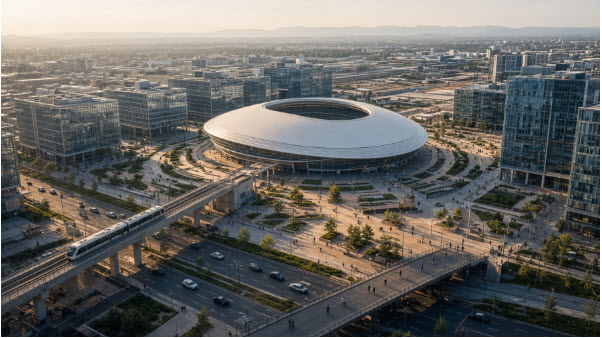
Some of the facilities initially built for athletes can be turned into housing for residents of the city. This practice has proved to be efficient in several past Olympic cities. Not every facility is reused. Some remain unused for years. Careful planning before construction plays an important role in this process.
Each tournament leaves a distinct mark on the city where it is held due to different planning and budgeting. Below are examples of infrastructure outcomes achieved by some famous international events.
It becomes evident that there is no single pattern as to what kind of legacy is left by infrastructure for each particular city and its further planning.
Upgrading of Energy and Digital Infrastructure
Major international tournaments also motivate cities to update power grids and telecom networks. Power supplies and high-speed internet connections are essential for broadcasting matches viewed across the world in the stadiums. As a rule, a new fiber-optic network is installed for tournaments, but it is further used by businesses and citizens. Such digital upgrading accelerates the pace of technological and connectivity development of a city. In addition, some cities try to test their renewable energy systems at tournaments.
A reliable digital infrastructure allows the use of ticketing systems and technologies of crowd management during a tournament. Cities apply smart sensors for monitoring the traffic flow and public safety in real time. After the tournament, this technology is used for the daily commuting of people. Investment in connectivity motivates technology companies to move to these places after the event.
Balancing between Cost and Value of Infrastructure Development
All infrastructure development does not necessarily benefit citizens who pay for it. Some stadiums become rather expensive in maintenance after the tournament crowds have disappeared. Economists often discuss whether these huge investments are worth such expenses. For successful cities, it is important to have a strategy of reuse of venues planned beforehand. Public spending transparency is one more tool for maintaining people's trust during the entire process.
An independent audit of infrastructure projects after the completion of major tournaments can help to understand which projects were really useful. Some cities have a requirement for the elaboration of a detailed legacy plan before the approval of hosting the event. This plan shows how venues and infrastructure will be used after the tournament. Learning from other cities, which have already hosted tournaments, helps to avoid repeating their mistakes in the future.
The Role of Local Communities in Planning Infrastructure Projects
The local community has a greater part in influencing the planning of infrastructure projects for tournaments nowadays. Public consultations allow ensuring that new infrastructure reflects the needs and everyday life of citizens. Employment during the process of construction is the source of additional income for many families. Sometimes, training programs associated with these projects create permanent job opportunities for people. The input of local communities increases the probability that infrastructure will become a part of life for many decades.
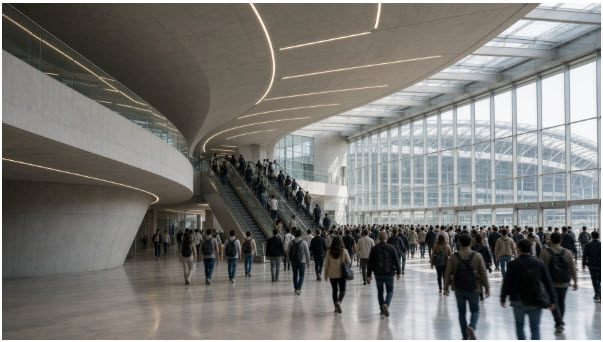
Some cultural events organized within the framework of tournaments increase the tourist potential of a city and improve its image. Museums, parks, and public artworks sometimes appear because of the budget connected with tournaments.
Environment-Friendly Infrastructure of Tournaments
In modern times, tournament hosts are increasingly required to consider the environment during construction works. Tournament organizers ask for the use of environmentally-friendly building materials and designs for stadiums that are energy-efficient. In addition, new waste management facilities have been set up to meet the needs that arise due to the increase in the number of visitors to the city. These environmental conditions can be expensive at first, but they can also decrease the operational expenses of the tournament organizers in the long term.
Cities that start thinking about sustainability at an early stage rarely have to spend more money to improve the infrastructure that is required by the tournament. Water management facilities are usually upgraded prior to hosting major sporting events. Upgraded drainage systems ensure that there won't be flooding during the event. Sometimes cities install a system to collect rainwater, which later becomes useful for watering gardens and parks.
The Lessons for Future Hosts of Tournaments
Tournaments that have taken place already can serve as examples to learn for future hosts of major tournaments. Budgeting and a realistic timeline for implementing plans have proven to be crucial for the success of the project. Moreover, those cities that engage citizens in the discussion of the project are less likely to face problems with public approval during construction.
There are plenty of cases available to study for the international organizations and cities that are bidding to host the next tournament. It is much easier to avoid making mistakes in the infrastructure of tournaments that were made before, thanks to these resources. In addition, collaboration between different organizations involved and private investors ensures that the results will be much better.
What Cities Get in The Long Run?
Tournaments can become a perfect catalyst for improving the city. Thoughtful planning enables host cities to make temporary changes in their infrastructure into long-term improvements. The transport, housing, energy, and other aspects of urban development can be improved for many decades due to the tournament.
