
How Gaming Slang Became the Internet’s Shared Accent
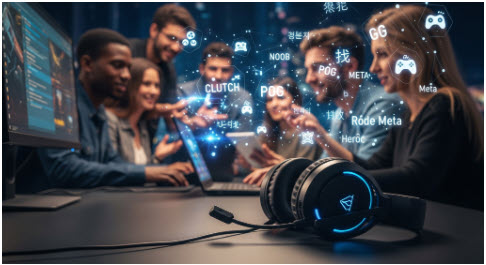
Gaming slang became global because games trained people to communicate quickly under pressure. “GG,” “nerf,” “meta,” “clutch,” “tilt,” and “AFK” are not just gamer jokes anymore. They now appear in work chats, streams, betting communities, Discord servers, TikTok captions, and live sports conversations. The language spread because it is short, emotional, and useful.
The internet did not invent compressed speech, but gaming perfected it. A player has no time for long explanations during a ranked match or final round. The right word must carry timing, mood, blame, praise, and instruction at once.
From LAN Cafes to Global Voice Chat
Early gaming slang travelled through LAN cafes, forums, clan tags, and voice servers. Counter-Strike, StarCraft, Dota, World of Warcraft, and League of Legends built communities that needed fast tactical language. Many terms crossed borders without translation because the game situation explained the meaning.
“Rush B” did not need a language lesson. “GG” did not need grammar. “Noob” did not need a dictionary, even if people disagreed about whether it was teasing or insult.
Why Short Words Beat Perfect Grammar
Gaming speech rewards speed. Players need to warn, react, and coordinate in seconds. That pressure creates words that feel almost physical.
The same pattern now shapes social media. A person who says a meeting was “nerfed” is borrowing a balance-patch term to describe reduced power. A football fan who says a striker was “AFK” means absence, not keyboard status. Slang survives when it solves a real communication problem.
Casino Slang Joined the Same Digital Stream
Casino language entered the same stream because modern entertainment audiences move between games, streams, sports, and mobile sessions. Terms tied to RTP, RNG, volatility, bankroll, wagering requirements, and house edge now appear in casual conversations among players who compare mechanics rather than just themes. A short visit to an online casino fits that vocabulary when users talk about spins, bonus rounds, variance, and session limits. The language helps people describe what happened without pretending the result was personal destiny. Good slang reduces confusion; bad slang turns risk into superstition.
Esports Made the Vocabulary Public
Esports popularized gaming slang in the mainstream because broadcasts needed to explain complex gameplay quickly. Riot Games runs global esports structures around League of Legends and VALORANT, while Valve’s Dota 2 ecosystem continues to center on The International as a major competitive marker. Viewers learned the language by hearing casters repeat it during high-pressure moments.
A “clutch” in VALORANT, a “baron throw” in League of Legends, and a “smoke misplay” in Counter-Strike all compress tactical information. The best terms act as headlines inside the match. They tell the viewer why the room suddenly changed.
Betting Communities Added Their Own Layer
Betting talk merged with gaming slang because esports audiences already think in maps, patches, form, roles, and momentum. Odds discussion is not just about who is “better”; it is about map pool, side selection, roster changes, travel fatigue, and patch timing. Fans who follow esports betting often use the same shorthand they use in match chat, especially when discussing tilt, throws, live odds, and underdog maps. The useful part of that vocabulary is precision: a bad draft is different from a bad price. Bankroll discipline still decides whether the conversation stays analytical or becomes emotional noise.
The Meme Machine Changed Corporate Language Too
Gaming slang now appears in offices because younger teams grew up online. “OP” means overpowered. “Cooldown” means recovery time. “Speedrun” means finishing a task fast, often with a hint of absurdity.
This shift is not always elegant, but it is efficient. A project manager saying “we are in bug-fix mode” borrows the logic of patches and releases. A designer saying “the onboarding has too much friction” sounds closer to game UX than old corporate manuals.
Live Chat Turned Slang Into Crowd Noise
Streaming platforms changed slang from private code into public rhythm. Chat does not speak in paragraphs. It pulses. One emote, one acronym, one repeated word can become the whole crowd.
That is why gaming language spreads faster than traditional sports commentary. It is participatory. The viewer is not just watching the match; they are helping to write the atmosphere.
Betting Sites Speak the Language of Fast Decisions
The same compression is evident in the sports and gaming markets because users scan information under time pressure. A modern betting site must present odds, live movement, market categories, event timing, and account controls without forcing users to decode the interface. Gaming slang influences that expectation because players are used to dashboards, rankings, timers, and instant feedback. A clean betting interface does not need to mimic a game, but it should still benefit from the same clarity. The best user habit is to slow down before staking, because fast language should not force fast money decisions.
Slang Also Creates Exclusion
Every shared language has a gate. New players can feel lost when chat fills with acronyms, irony, and insults disguised as jokes. That is the weak side of gaming slang: it can build community while also blocking newcomers.
Developers and communities have tried to soften that edge with better tutorials, onboarding, moderation, and ping systems. The work is uneven. Still, the direction is clear: better communication keeps more players in the game.
Why the Words Keep Spreading
Gaming slang spreads because it travels well. It is short enough for chat, expressive enough for memes, and flexible enough for work, sport, casino talk, and esports analysis. Most terms carry a story inside them: pressure, failure, luck, skill, comeback, overconfidence.
The next wave will likely come from AI-assisted games, creator-led competitions, and mixed reality interfaces. New mechanics create new words. Players will shorten them before dictionaries even notice.
