
How Gaming Communities Create Their Own Digital Language and Online Slang
In 2026, video games have long ceased to be mere entertainment, evolving into full-fledged digital ecosystems with their own cultural codes, social hierarchies, and—most importantly—unique linguistic systems. Gamer slang has moved far beyond in-game chats, permeating everyday youth language, marketing, and even business communication. The formation of this “digital language” is a unique phenomenon in which the speed of interaction and the need for group identity create new linguistic layers faster than at any other point in history.
Evolution and Origins: From Technical Constraints to Identity
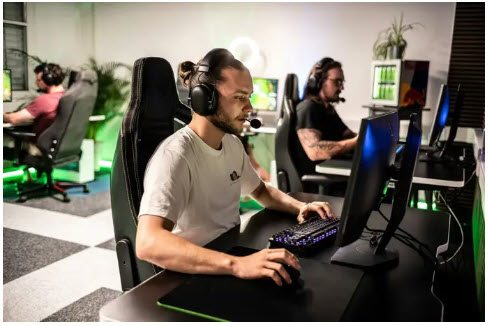
The emergence of gaming slang was initially driven by purely practical necessity. In the early days of multiplayer online games (MMOs) and the first networked shooters, players were limited by typing speed. In fast-paced battles where every second of delay could lead to a team’s defeat, long sentences were an unaffordable luxury. This led to the first wave of abbreviations that are now considered classics: AFK (away from keyboard), BRB (be right back), and GG (good game).
Over time, however, these technical shortcuts began to accumulate cultural meaning. Gamer language became a way to distinguish “insiders” from “outsiders.” Each gaming discipline started developing its own lexicon. For example, esports analysts on the EGW news platform often emphasize that the language used by professional players in Dota 2 or League of Legends is so specific that an external observer would struggle to understand strategic discussions without a dedicated glossary. What began as a time-saving tool gradually transformed into a complex mechanism of social identification. Each new generation of games introduces its own terminology, which quickly becomes widespread online, creating an endless cycle of linguistic renewal.
Word Formation Mechanisms and Linguistic Creativity
The creation of new words within gaming communities follows the principles of linguistic economy and metaphor. The most common mechanism is Anglicism—the borrowing of English terms and their subsequent adaptation to Ukrainian grammar. This is how verbs such as “farmyty” (from farm—repetitively gathering resources), “bafnuty” (from buff—to strengthen a character), or “vaipnuty” (from wipe—total team elimination) emerged. These words are precise, concise, and ideally suited for rapid communication.
Another powerful mechanism is visual metaphor and meme culture. By following the latest gaming news, one can observe how terms born on Twitch instantly become part of everyday vocabulary. For instance, using the names of emotes (PogChamp, Kappa, LUL) in text allows players to convey complex emotional nuances without lengthy explanations. This demonstrates the community’s high level of creativity—it does not merely copy existing words but constructs entirely new semantic frameworks. Gamer language is a hybrid of text, imagery, and cultural codes that constantly mutates, adapting to new gameplay mechanics and social trends.
The Psychological Dimension: Slang as a Tool for Unity and Defense
From a psychological perspective, mastery of gaming slang serves as a form of “social glue.” In the vast and often hostile digital space, a shared language gives players a sense of belonging. It functions as a form of escapism—within the virtual world, one becomes part of an elite group that understands both the rules of the game and the language used to describe them. Slang creates a safe environment where communication occurs at an intuitive level.
However, this phenomenon also has a hierarchical dimension. Terminology is often used to define player status. Expressions such as noob (a beginner), casual (a player who plays infrequently), or conversely pro and sweaty (overly serious or competitive players) help quickly categorize interlocutors. This forms a type of digital elitism. At the same time, gaming communities develop defensive mechanisms. Language is used to identify toxicity or cheating, enabling self-regulation without external moderation. In this way, digital language becomes an internal governance tool within virtual societies.
Impact on the Real World and the Future of Digital Linguistics
We are witnessing a historic moment in which gaming slang is beginning to dominate mainstream culture. Words that were considered marginal a decade ago are now part of everyday vocabulary. Concepts like “quest,” “level up,” “hate,” or “cringe” have become universal. This indicates that the gaming industry has become a primary source of cultural and linguistic innovation in 2026.
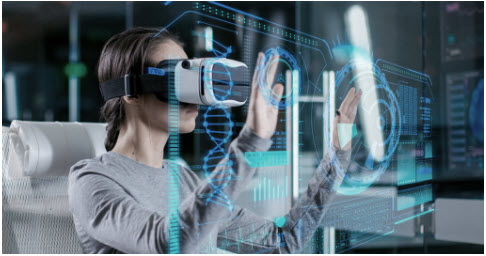
The future of this language is closely tied to the development of virtual reality (VR) and augmented reality (AR) technologies. In metaverses, communication becomes increasingly multimodal. We will see a synthesis of voice commands, avatar gestures, and instant text projections. Gaming slang will no longer be just a collection of words—it will evolve into a system of symbols perceived through multiple senses. Gamer language is already the most globalized language in the world, transcending national borders and linguistic barriers by uniting people around shared gaming experiences. It is the language of the future—fast, expressive, and highly adaptive to environmental change.
Conclusion
In conclusion, the creation of digital language by gaming communities is not merely a linguistic curiosity but a profound sociocultural process. It reflects modern humanity’s desire for efficient communication in an era of information overload and a strong need for self-identification. Gamer slang democratizes language, making it more dynamic and flexible.
Despite criticism from linguistic purists, this phenomenon enriches communication with new meanings and emotional nuances. Gaming communities have demonstrated that understanding one another does not require complex grammatical structures—sometimes a simple “GG” is enough to express respect, acknowledge skill, and conclude a shared story written together in a virtual world. In the future, the influence of this language will only grow, bringing the digital and real worlds even closer together.
