
How Experiential Marketing Changes the Way You Connect With Customers
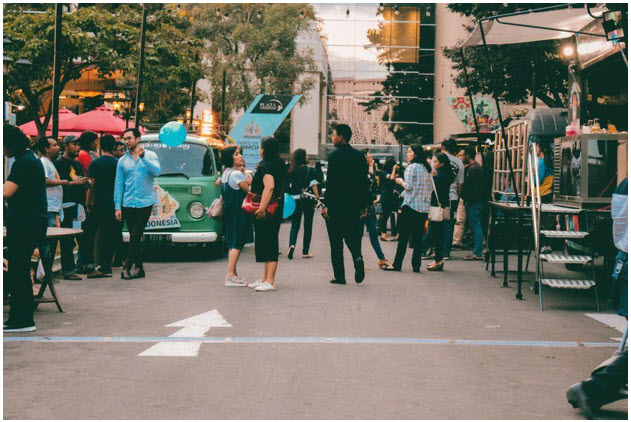
If you’ve ever walked past a pop-up event and suddenly wanted to stop, touch, try, or film what was happening, you’ve already seen experiential marketing in action. It turns ordinary promotion into something you can step into, not just scroll past.
For brands, that shift matters. People are buried in ads every day, and most blend into the wallpaper. A memorable experience can cut through the noise, create stronger recall, and make your audience feel involved instead of targeted.
What Experiential Marketing Actually Means
Most advertising talks at you. A banner, a jingle, a slogan you scroll past. There's another approach that flips that around and asks you to step in and take part instead of just watching.
That approach is experiential marketing, a strategy built on direct, memorable interaction between a brand and its audience. Rather than push a message, it hands you something to do. That might be a pop-up installation, a product demo, an interactive booth, a live activation, or a campaign that blends the digital and physical in real time.
The aim underneath all of it is emotional connection. You're not simply hearing what a brand claims. You're testing it, reacting to it, and forming your own impression on the spot.
Picture a sneaker company letting you customize a pair at an event, or a gaming brand running a quick tournament in a public square. Those moments feel less like ads and more like something you chose to join.
That's why the approach sticks. People trust what they experience far more than what they're told. A clever slogan can catch your eye for a second, but a hands-on encounter can keep a brand in your memory for months.
Why Traditional Advertising Often Falls Flat
You see ads everywhere: on apps, videos, buses, podcasts, websites, and random corners of the internet that somehow know what shoes you looked at once. It’s a lot. Audiences have become skilled at tuning it out.
Traditional advertising still has a place, but it often struggles with attention span and trust. A banner ad asks for a glance. A commercial asks for patience. An experience asks for participation, which changes the dynamic right away.
When people can walk through a branded installation, sample a product, or join a live event, they’re no longer passive. They become part of the moment. That tends to increase recall, social sharing, and emotional buy-in.
There’s also a credibility boost. If a skincare brand promises hydration, letting people try the product on-site feels stronger than listing buzzwords on a glossy ad. If a tech brand says its device is fast, a live demo gives that claim some backbone.
Consumers, especially younger ones, often want proof over polish. A good experience delivers both without feeling like a hard sell in a blazer.
The Elements That Make an Experience Work
Not every branded event deserves applause. Some are expensive photo backdrops with little strategy behind them. A strong experiential campaign needs more than pretty lighting and a giveaway table.
The best ones usually include:
- A clear goal, such as product awareness, lead generation, or customer loyalty
- A defined audience with specific interests and habits
- Interactive features that make people do something, not just look around
- Shareable moments that feel natural, not forced
- Staff or brand reps who can actually talk to people without sounding robotic
- A way to measure results after the event ends
Good execution also depends on relevance. A luxury watch brand and an energy drink company should not be using the same playbook. The experience has to fit the product, the audience, and the setting.
Timing matters too. A great activation during a major festival, trade show, or sports weekend can pull far more traction than the same setup dropped into a dead retail corridor on a Tuesday afternoon.
How Brands Use Experiential Tactics in Real Life
Experiential campaigns show up in more places than you might expect. Retail stores use product trials and in-store events. B2B companies build immersive trade show booths. Streaming platforms create pop-up spaces tied to new releases. Food brands hand out samples in ways that feel more inventive than a person with a tray and a tired smile.
A beauty company might set up a skin analysis station where visitors get personalized product suggestions. A car brand might offer test-drive events with virtual features built into the experience. A software company could create a live problem-solving demo at a conference so prospects can see the platform in action instead of sitting through another slideshow that dies on slide 18.
Even smaller businesses can use the model. A local fitness studio might host an outdoor class and recovery lounge. A bookstore could run a themed author night with interactive activities and exclusive bundles.
The format can change, but the goal stays steady: give people something useful, interesting, or memorable enough that the brand earns attention instead of renting it for a few seconds.
The Benefits Go Beyond Attention
A lot of people think experiential work is mainly about buzz. Buzz helps, sure, but the deeper value often shows up after the crowd leaves.
A well-designed experience can improve:
- Customer trust
- Word-of-mouth referrals
- Social media engagement
- Product understanding
- Lead quality
- Purchase intent
When someone spends five meaningful minutes interacting with a brand, that can outperform dozens of forgettable impressions; it also creates better story material. People are more likely to post about something they did than something they merely saw.
There’s a research angle too. Live interactions give brands direct feedback. You can watch what draws people in, where they lose interest, what questions they ask, and which features they react to. That kind of insight is gold because it comes from real behavior, not only survey answers filled out in a rush.
Done right, experiential marketing doesn’t just entertain. It sharpens positioning, supports sales, and helps brands understand their audience with fewer guesses.
What You Should Watch Out for Before Using It
Experiential campaigns can be powerful, but they are not magic. They take planning, budget discipline, staffing, logistics, and a realistic sense of what success looks like.
One common mistake is building an event around spectacle with no business objective attached. If people show up, grab freebies, post a quick video, and leave with no idea what the brand actually offers, the campaign may look busy while doing very little.
Another issue is mismatch. If the audience isn’t right, the message won’t land. If the experience feels fake, overly scripted, or disconnected from the brand, people notice fast. Consumers have a strong radar for gimmicks.
You also need follow-through. If a campaign collects leads, someone has to nurture them. If it launches a product, inventory and support should be ready. If it sparks online attention, the digital team needs to keep the momentum going.
Experiential marketing works best when it’s part of a larger strategy, not a one-off stunt that vanishes the next morning along with the branded beanbags.
How to Know If It’s the Right Move for Your Brand
You don’t need a giant budget or a celebrity guest list to make experiential marketing useful. You need a reason to create direct interaction and a plan for turning that interaction into results.
Ask a few practical questions:
- Do you have a product or service people benefit from trying firsthand?
- Is your audience likely to attend events or engage with live activations?
- Can you connect the experience to measurable goals?
- Do you have the team and follow-up process to support it?
- Can you make the experience feel authentic to your brand?
If the answer is yes to most of those, experiential marketing deserves serious consideration. It can help you move beyond passive visibility and into real connection.
People remember what they felt, what they tested, and what surprised them. That gives brands a rare edge in a crowded market. When you create something people can step into, respond to, and talk about later, your message stops acting like background noise and starts becoming part of their experience.
