
Decoding "Bot-Speak": How the Internet is Fighting Back Against Robotic Language
Since the dawn of dial-up internet, online communication has developed its own unique ecosystem of language. We created acronyms like LOL and BRB to save time on T9 keyboards. We invented emojis to convey sarcasm in plain text. For decades, the evolution of cyber-slang was driven by human beings trying to inject emotion and speed into digital screens. However, the generative AI boom has introduced a completely new, and somewhat unnatural, dialect to our forums, emails, and social media feeds: "Bot-Speak."
Today's netizens are developing a highly tuned radar for this synthetic language. When you read an email or a Reddit post that uses words like "delve," "furthermore," "tapestry," and "in conclusion" in perfect, rigid succession, your brain immediately flags it as machine-generated. To combat this homogenization of internet culture, users are turning to a Free AI humanizer to scrub the robotic "accent" from their drafts and restore the natural, chaotic rhythm of actual human typing.
The Rise of the "AI Accent"
In the glossary of modern internet communication, the "AI Accent" is a defining term of the 2020s.
Definition: Bot-Speak / AI Accent – The highly predictable, statistically average, and emotionally flat writing style produced by standard large language models. Characterized by flawless grammar but a complete lack of personality, regional slang, or pacing.
The problem with Bot-Speak isn't that it is grammatically incorrect; it's that it is socially disconnected. The internet has always thrived on authenticity. Whether you are writing a heartfelt blog post, replying to a customer service inquiry, or debating a topic on a message board, readers want to know there is a real person behind the keyboard. When text is overly sanitized and mathematically perfect, it creates a psychological barrier. It feels like spam. It lacks what linguists call "burstiness"—the human tendency to mix long, complex thoughts with short, punchy fragments.
Bridging the Gap with Text Translation
Of course, the efficiency of AI drafting is undeniable. We use language models to outline articles, summarize long PDF documents, and overcome writer's block. The challenge for digital citizens is figuring out how to use these tools without sounding like a completely automated script.
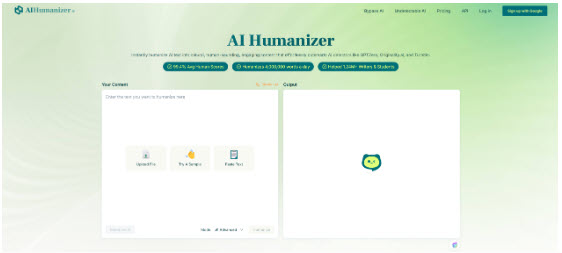
This necessity has sparked a surge in secondary communication tools. For digital marketers, students, and everyday web users, finding the best ai humanizer has become just as important as finding a good spellchecker. These platforms act as a digital translator. They take the rigid, "Wikipedia-style" output of a standard AI and intentionally restructure the phrasing. They remove the repetitive transition words, introduce natural varied sentence lengths, and apply a conversational tone that mimics how actual humans talk in everyday cyberculture. It is the digital equivalent of taking a stiff corporate memo and turning it into a friendly text message.
Protecting Your Digital Identity
Why is this so crucial for modern internet users? Because our words are our digital identities. Search engine algorithms, spam filters, and human moderators are increasingly penalizing content that appears to be mass-produced "slop."
If a professional sends a networking email that sounds like it was written by a robot, the recipient is likely to delete it, assuming it is an automated blast. If a blogger publishes articles entirely in Bot-Speak, their readers will simply unsubscribe. Using a specialized text processor is a way of practicing good "netiquette" (internet etiquette). It shows your audience that you respect their time and attention enough to communicate with them on a human level, rather than just feeding them raw algorithms.
The Future of Human-Centric Cyberspace
As artificial intelligence continues to integrate into every app, keyboard, and browser, the line between human and machine communication will continue to blur. However, the fundamental human desire for authentic connection will never change. We will always seek out the heartbeat behind the screen.
The evolution of cyber-language is no longer just about creating new acronyms; it is about preserving our humanity in a sea of synthetic data. By integrating a natural sounding ai humanizer into your digital toolkit, you ensure that your unique voice isn't lost in the algorithm. Platforms like https://aihumanizer.ai/ are leading this charge, providing the essential translation layer that allows us to enjoy the speed of artificial intelligence while strictly maintaining the warmth, quirks, and authenticity of true human connection.
